
recommendation ai
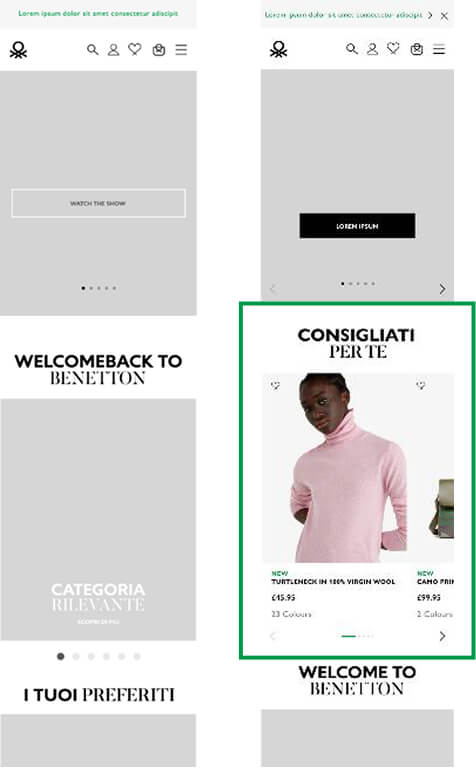
integrate an AI-powered product recommendation system across key pages of Benetton's eCommerce platform to improve conversion rate, Reduce friction in the shopping funnel, and increase user engagement.
my role
As UXUI Designer Specialist, I led the exposure strategy and design execution across five markets.
Key Responsibilities
Ownership of exposure logic definition
Heuristic evaluation of high traffic pages
Identification of friction points using user behavior data
Redesign of strategic pages to include the AI module
Supervision of ux implementation
Definition of A/B testing roadmap
Iterative design optimization based on performance data


risks and opportunities
Primary risk
⟶ Cognitive overload in high-intent task phase
⟶ Trust erosion in automated suggestions
⟶ Cross-market behavioral variance
Opportunities
⟶ Increase engagement and conversion
⟶ Scalable automation of recommendation logic
⟶ Operational efficiency compared to manual systems
decisional framework
When moving from a manual recommendation system to an automatic predictive system, the main risk was experiential. Without a clear structure, the model could have generated excessive exposure, out-of-context recommendations, or a perceived loss of control on the part of the user.
For this reason, I defined 4 pillars that served as a decision-making framework.
⟶ Contextual activation Activation of predictive models based on user intent and task phase
⟶ Controlled exposure rules Explicit logic governing when and how AI outputs are displayed.
⟶ Behavioral triggers Model activation based on meaningful user actions.
⟶ Frequency governance Frequency caps to preserve trust and avoid cognitive overload.
predictive model training
The model was trained for 90 to 120 days with user and product data from 5 countries to enable the inclusion of popular products, cross-category product suggestions, personalize the individual experience
Three models were defined:
⟶ Recommended for you
⟶ Frequently bought together
⟶ Others that you may like
model activation and funnel intent
Different predictive models association with specific stages of the user journey based on user intent to ensure contextual relevance and prevent model saturation across the experience.
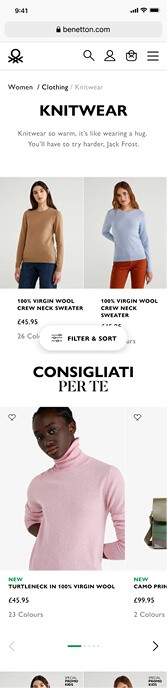
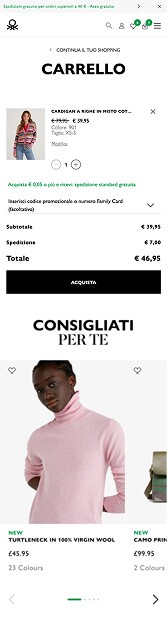
⟶ Homepage & Listing pages ⟶ Discovery models ⟶ Recommended for you
⟶ Product detail page & Cart ⟶ Decision-support models ⟶ Frequently bought together, Others that you may like


pdp and exposure logic
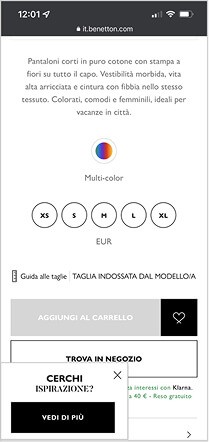
To prevent cognitive overload and preserve trust, exposure rules were defined based on user behavior and frequency control.
Trigger conditions:
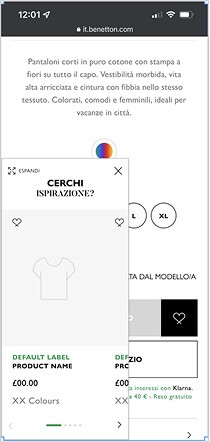
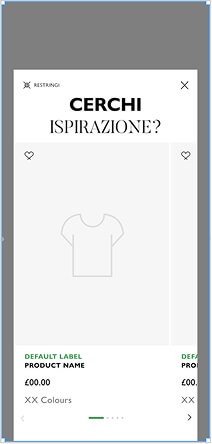
⟶ Scroll without interaction ⟶ Others you may like
⟶ Add to cart ⟶ Frequently bought together
Constraints:
⟶ One activation per PDP
⟶ Displayed once per session
⟶ No overlapping models
This ensured contextual activation without interrupting the decision flow.
heatmaps results
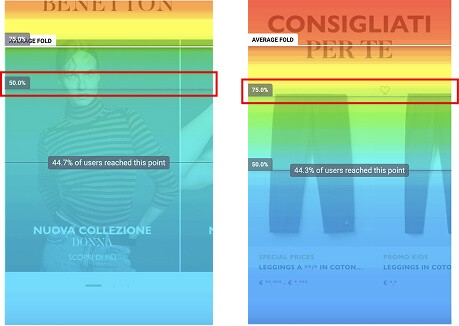
75%
of users reached the recommendation module
+25%
improvement compared to previous layout